 DARK MATTER
Artificial intelligence · 6 min read · Updated
What does an ERP with artificial intelligence change for a small business?
Short answer
An ERP with artificial intelligence lets you ask for data and get tasks done by writing as you would to a coworker, and it can spot what a normal report doesn't show. For a small business, the value usually lies in quoting faster, reading documents and finding information. You don't need to switch systems: AI can connect to the ERP you already use if its data is in order.
Also asked as
- What is an AI-powered ERP?
- How is AI used in an ERP?
- Can I add artificial intelligence to my current ERP?
What it means for an ERP to have AI
An ERP stores and organizes a company's operations. Artificial intelligence adds a layer that understands natural language, reads documents and finds patterns in that data.
In practice, instead of digging through several menus, someone writes what they need and the system answers or prepares the work using the business's real information.
Uses that actually help a small business
- Quoting from a written order, using ERP prices.
- Reading invoices and purchase orders to avoid manual entry.
- Asking about sales, inventory or receivables without building a report.
- Flagging unusual changes in margins, stock or receivables.
- Answering customers about the status of their order.
What not to expect from AI
Artificial intelligence doesn't fix messy data. If inventory doesn't match reality, it will answer quickly and wrongly, so getting the data in order comes before AI.
Nor should it record important transactions without control. The prudent approach is for it to propose and for a person to confirm when an action affects money, stock or a customer.
Add AI to your ERP or switch systems
If your ERP works and can connect through an API or export data, the usual path is to add AI on top and keep it. Switching ERPs just to get AI is rarely justified.
Switching makes sense when the current system won't release its data, no longer covers your operation or the team already works around it.
Where to start
- Pick a specific process, such as quoting or invoice entry.
- Measure how long it takes today and how many errors it has.
- Check that the data for that process is complete.
- Test with a small group and real cases.
- Expand only once the result is proven.
What drives the cost
Cost depends on whether the current ERP can connect, the number of processes, data quality and query volume, because each call to the language model has a usage cost. It is defined in a written proposal, after reviewing your system and your data.
Security of ERP data
An ERP holds prices, customers and margins. AI should reach only what each task needs and respect each user's permissions. It's also worth reviewing the model provider's terms on how your information is handled.
How we solved it
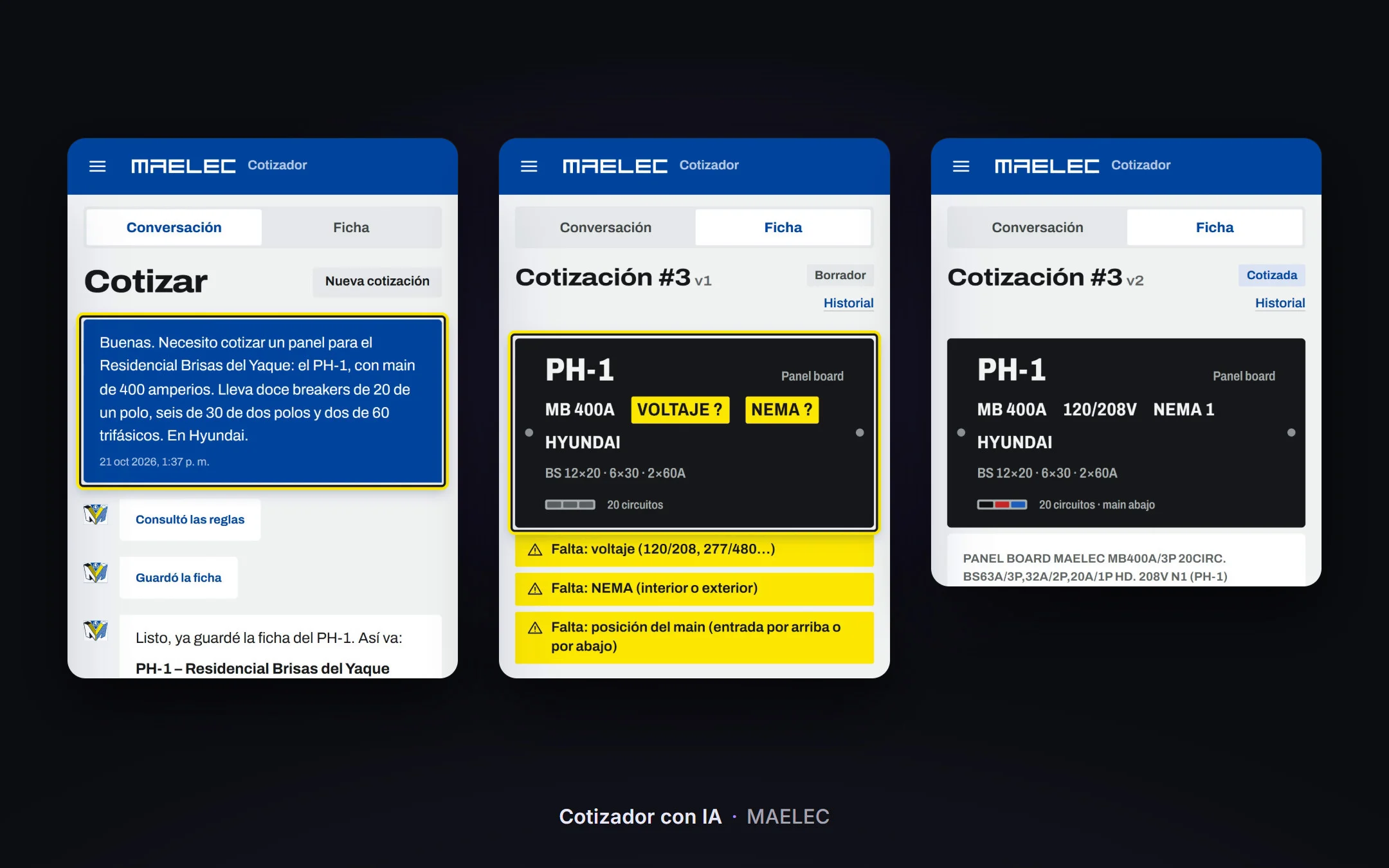 Industrial electrical equipmentMAELEC · Cotizador con IAFor an industrial electrical equipment distributor we built an AI quoting tool: the rep writes the order as they would to a coworker, the agent asks only for what's missing and quotes with ERP prices, keeping a version history of each quote.See the project →
Related questions
Do I need to change my ERP to use AI?
Usually not. If your ERP can connect or export data, AI can be added on top of what you already have.
Can AI change data in the ERP?
It can, but that should be limited. The prudent approach is for it to prepare the transaction and for a person to confirm when it affects money, stock or customers.
Does it work for a small company?
Yes, if there is a repetitive task with organized data. It's best to start with one process and expand based on results.
Does your business have this question?
Walk us through your operation in a free assessment and get a written proposal with scope, phases, timeline and investment.
Keep reading
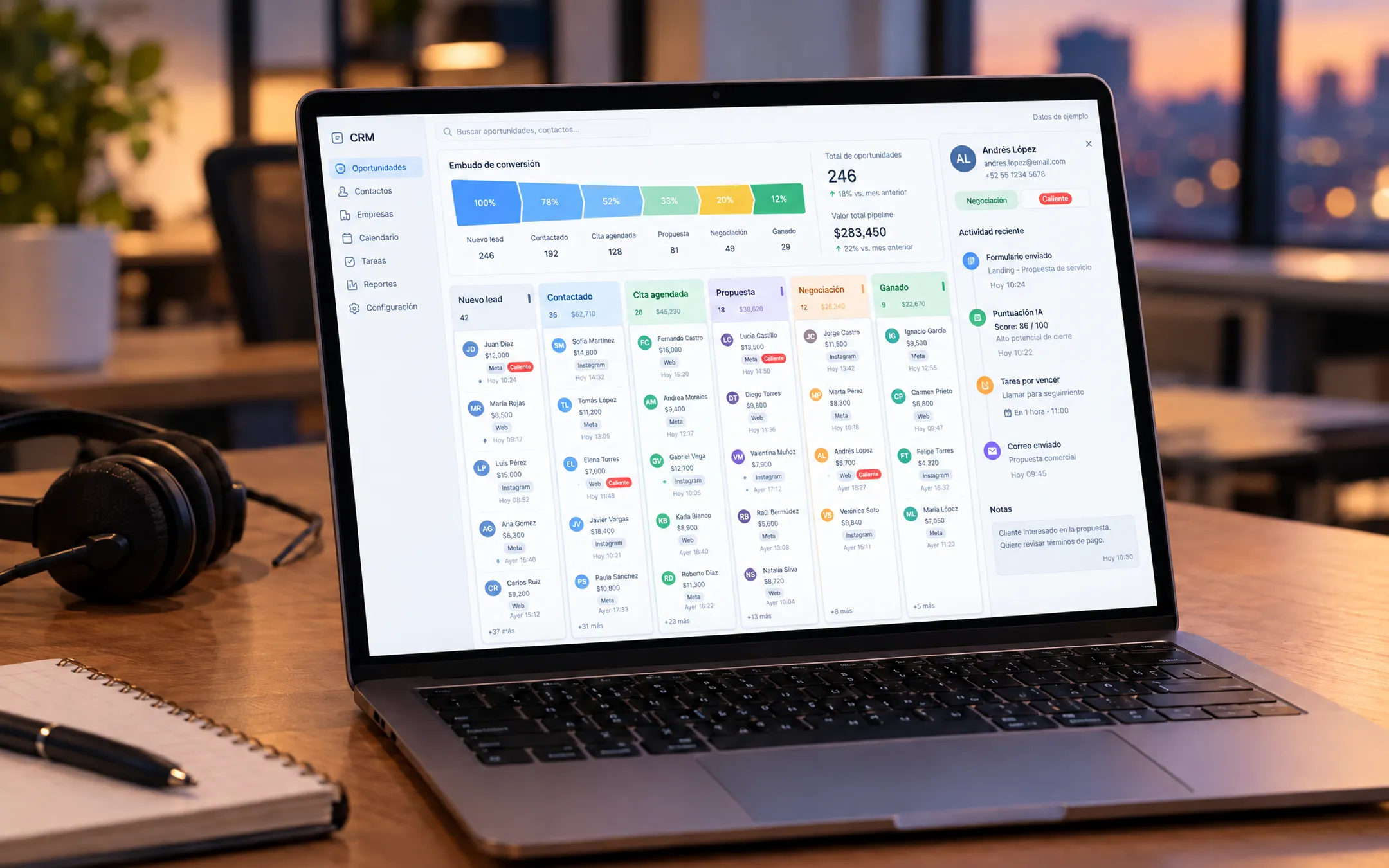 Artificial intelligence · 6 min readHow do I start automating my business with artificial intelligence?Start with one repetitive process that already costs hours or money, such as replying to leads, following up with customers or capturing data, and connect AI to the tools you already use (CRM, WhatsApp, forms). Measure the result in weeks, then automate the next process. AI performs when it works with your real data and clear rules for when to hand off to a person.Read the answer →
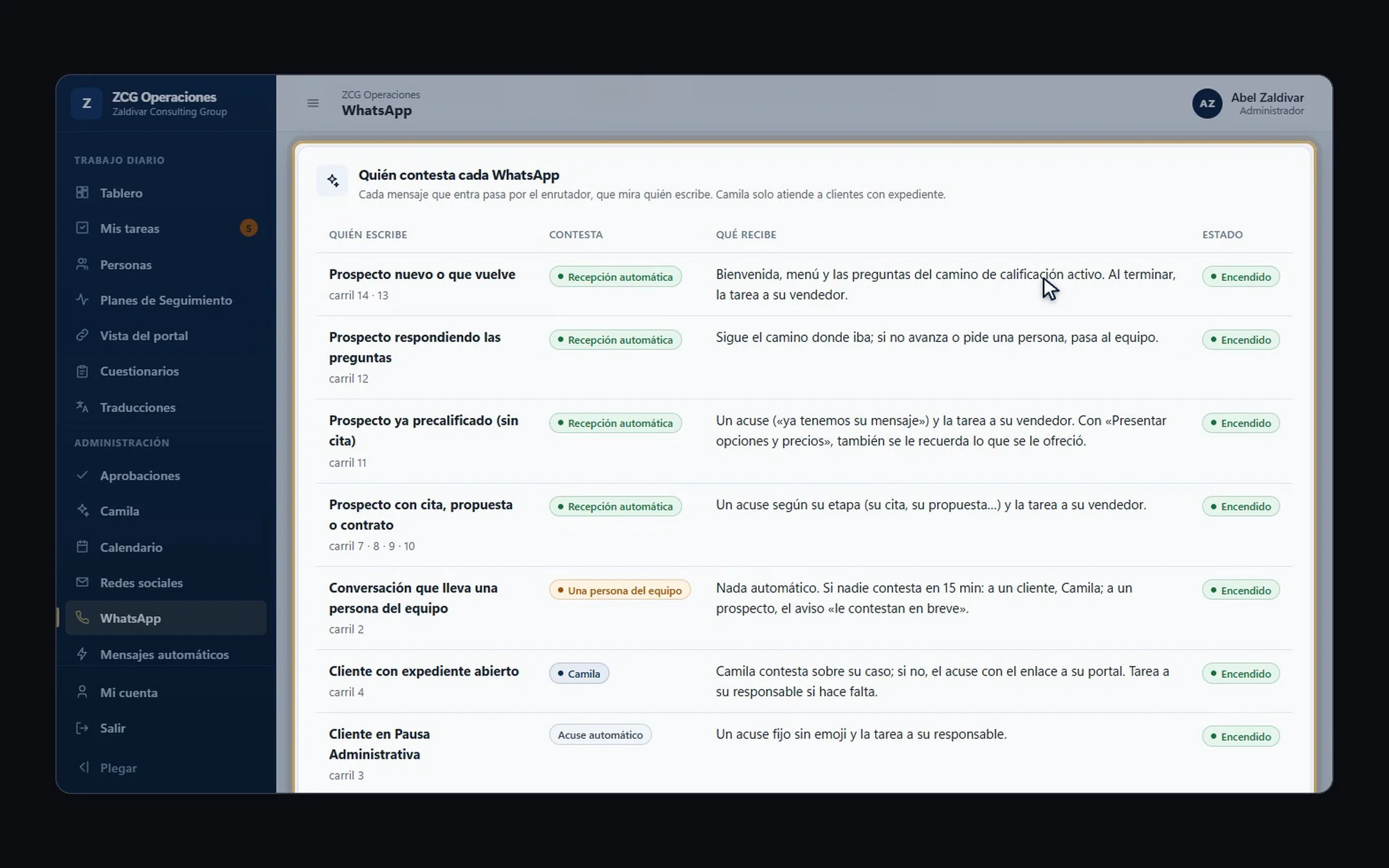 Artificial intelligence · 5 min readCan an AI assistant handle my customers on WhatsApp?Yes. An AI assistant can answer on WhatsApp around the clock with your company's real information: order or case status, hours, prices, missing documents. The key is connecting it to your systems, limiting what it can say and handing the conversation to a person when the case needs it.Read the answer →Artificial intelligence · 5 min readHow do you build an automatic AI quoting tool for a technical equipment distributor?An automatic AI quoting tool for a distributor takes the order typed the way you would tell a colleague, builds the spec sheet for each piece of equipment, asks only for what is missing and quotes with the prices in your ERP. A spreadsheet with formulas is enough when your products have few combinations; a custom quoting tool makes sense when every quote means checking sizes, brands and price lists by hand and each salesperson does it their own way.Read the answer →