 DARK MATTER
Fleets and GPS · 5 min read · Updated
How do I know which vehicle in my fleet is about to fail before it stops operations?
Short answer
To know which vehicle in your fleet is about to fail before it stops operations, you need a tracker plugged into the OBD-II port that sends fault codes (DTCs) and engine data to a platform that alerts you by email or SMS. It does not predict the future: it tells you as soon as a vehicle reports a fault, which usually gives you days to act instead of finding out on the road.
Also asked as
- Why did the check engine light come on in a fleet truck
- Engine fault alerts for vehicle fleets
- What are geofences and how are they used in a fleet
How to detect faults in your fleet vehicles
Every modern vehicle checks its own engine and, when something goes out of range, stores a fault code (DTC) and lights the dashboard warning. A tracker plugged into the OBD-II port reads those codes along with data such as RPM, voltage, temperature and load, and sends them to the platform. The fault reaches the fleet manager even if the driver never reported it.
Which data is worth watching
- Fault codes (DTC) with a plain-language description.
- Battery voltage and engine temperature.
- RPM, load and speed.
- Fuel, with the sensor calibrated so the reading can be trusted.
- Mileage or hours of use to plan maintenance.
Alerts: what they say and who gets them
A useful alert reaches the person who can act, with the vehicle, the fault and the time. The most common are engine fault, speeding, leaving a zone and low battery. They go out by email or SMS, and each company decides who receives them so they do not get lost in a general chat.
What geofences are for
A geofence is a zone drawn on the map, such as the yard, a customer site or a city. The platform alerts you when a vehicle enters or leaves it. It helps you know when a delivery arrived, spot use outside working hours or confirm a unit stayed on its route.
From alert to fix: an incident flow
Receiving the alert is not enough if nobody handles it. What organizes the work is a flow: the fault is logged as an incident, someone picks it up, the action is noted and it is closed when the vehicle is fixed. Your team can then see which faults are still open and which are handled.
What to check before you hire
First, which trackers you use and whether they read OBD-II, because a tracker that only gives position does not report faults. Then, which alerts you need, who receives them and whether you want PDF reports or role-based access. Cost depends on the number of vehicles, the hardware and the alerts; we define it in a written proposal after a free assessment.
How we solved it
 Fleet & IoTNexus OBDIn Nexus OBD, a multi-tenant SaaS in production, a custom gateway decodes Teltonika tracker telemetry and shows it on a live map with engine data. It includes fault-code (DTC) tracking with an incident flow, geofences, email and SMS alerts and PDF reports.See the project →
Illustrative image with sample data; the real screens are private to the client.
Related questions
Can the platform predict a breakdown?
Not with certainty. It alerts you as soon as the vehicle reports a fault or an out-of-range value, so you can act before operations stop.
Does it work with the trackers I already have?
It depends on the model and on whether they read OBD-II. The first thing we check in the assessment is the device and its protocol.
Who receives the alerts?
Whoever you decide: the fleet manager, the shop or several people at once. Permissions are set by role inside each company.
Does your business have this question?
Walk us through your operation in a free assessment and get a written proposal with scope, phases, timeline and investment.
Keep reading
Fleets and GPS · 6 min readWhat should truck fleet management software include?Good fleet software shows every vehicle live on a map, reads engine diagnostics (OBD-II), sends speed, geofence and fault alerts, stores route history and flags maintenance. If you resell tracking or need your own rules, a custom platform connected to the trackers you already use makes sense.Read the answer →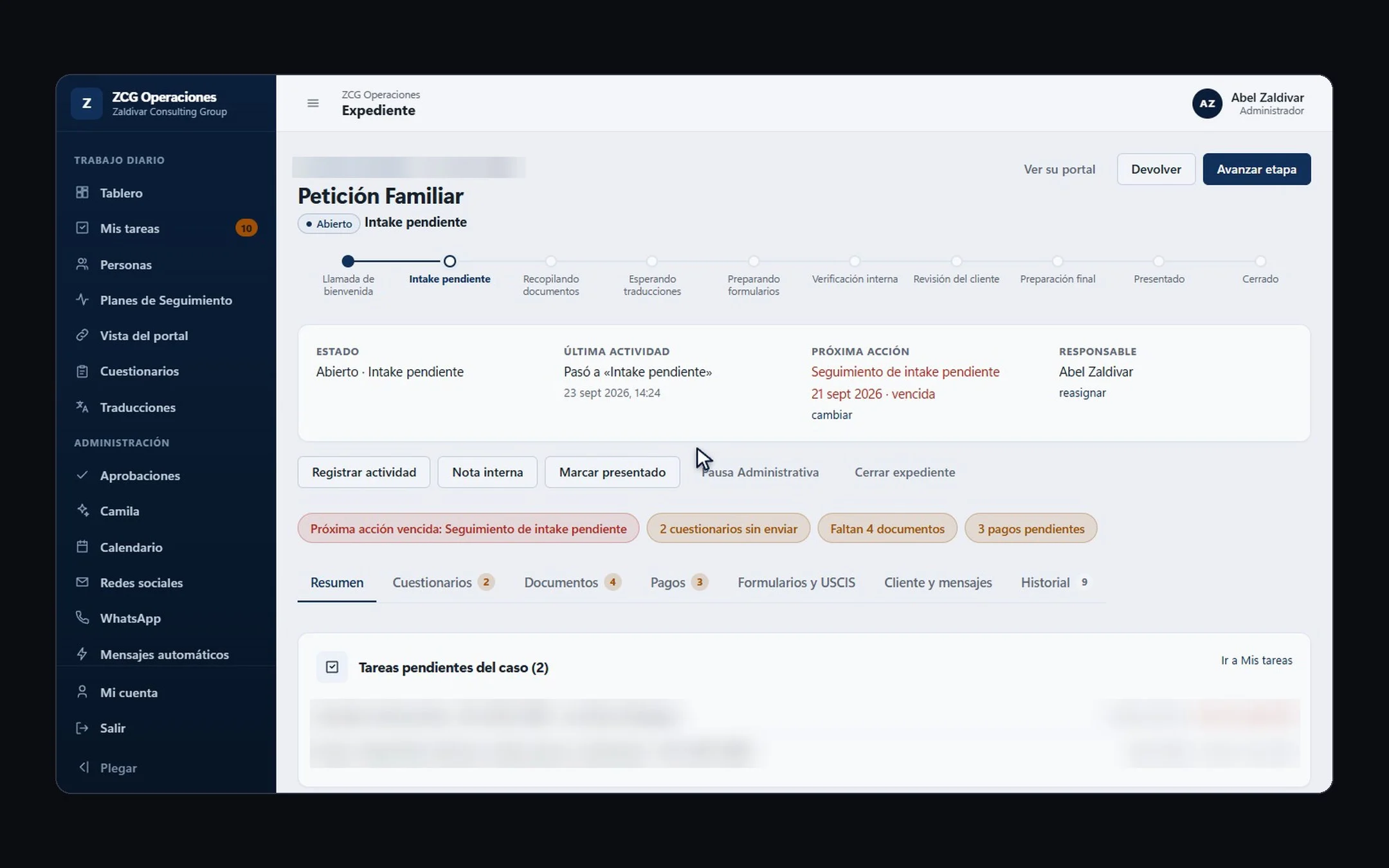 Hiring a developer · 6 min readHow do you choose a custom software development company in the US?Pick a company with real projects similar to yours, that understands your operation before talking technology, and that puts scope, phases, timeline and investment in writing. Before signing, confirm who owns the code, what support looks like after launch, and that they can work in your team's language.Read the answer →
 Hiring a developer · 8 min readWhat are the best custom software and AI automation options for Hispanic small businesses in the US in 2026?For most Hispanic small businesses in the US, a bilingual software studio that understands the operation, builds in phases and leaves the code in the client's name is the best fit. A freelancer works for something small and one-off; a no-code tool for a simple process; an offshore agency if you have someone to manage it in English; and a big consultancy if you are a large company. Below are the criteria to compare anyone, including us.Read the answer →