 DARK MATTER
Artificial intelligence · 6 min read · Updated
How do I build an internal knowledge base with AI for my company?
Short answer
An internal knowledge base with AI is built by connecting an assistant to your company's real documents (manuals, policies, procedures, catalogs) so your team can ask in plain language and get the answer with its source. The hard part is not the AI model but having documents that are organized, current and clearly permissioned. That's why you start with one department and one set of frequent questions, not the whole company.
Also asked as
- How do I make a ChatGPT with my company's documents?
- How do I create a smart search tool for my team?
- What is an AI knowledge base and how much does it cost?
What an internal AI knowledge base is
It is an assistant that answers your team's questions using only your company's information: manuals, policies, price lists, procedures and answers that today live in the heads of a few people. Instead of searching folders or asking a coworker, the employee types the question and gets the answer along with the document it came from.
How it works under the hood
Documents are split into pieces and stored in a database that searches by meaning, not just by words. When someone asks a question, the system finds the most relevant pieces and hands them to the AI model, which writes the answer and cites the source. This technique is called retrieval-augmented generation (RAG), and it is what keeps the assistant from making up facts that are not in your documents.
When it is worth it for a company
- Your team repeats the same internal questions every day.
- Procedures live in PDFs, Word files, chats and the memory of key people.
- New hires take a long time to learn where everything is.
- You run several locations or shifts and answers change depending on who responds.
- Information sits in several systems and nobody queries it together.
What you need ready before starting
The quality of the assistant depends on the quality of the documents. Before building anything, decide which documents are the official version, who updates them and which ones should not be shown to everyone. An assistant connected to outdated or contradictory documents will answer with the same confusion that already exists.
Permissions and information privacy
Not everyone should see everything. A well-built internal assistant respects roles: the salesperson doesn't see payroll and the technician doesn't see contracts. It is also wise to mask personal data, log every query and decide whether information is processed by an outside service or on your own infrastructure.
What drives the investment
- How many documents and of what type (PDFs, spreadsheets, emails, web pages).
- How many systems it must query live, such as CRM or inventory.
- Roles and permissions per department.
- Channels: web, WhatsApp or inside your current system.
- Languages and how much review the answers get.
How to start without risking operations
The safest path is to pick one department, such as internal support or sales, and collect its forty or fifty most repeated questions. You build that part first, measure whether the answers are correct and expand in phases. The cost is defined after a free assessment, in a written proposal with scope, phases and timelines.
How we solved it
 Multiple industriesAsistentes con IA · Integraciones LLMIn our AI assistants, every answer is grounded in the company's manuals, policies, catalog, inventory and CRM, with retrieval-augmented generation to cite the source. Personal data is masked, every action is logged and the conversation passes to a person with full context when the question calls for it.See the project →
Illustrative image with sample data; the real screens are private to the client.
Related questions
Can the AI make up answers that are not in my documents?
A poorly configured assistant can. With retrieval-augmented generation it answers only from the pieces it finds in your documents, cites the source and says so when it doesn't have the information.
Are my documents used to train another company's model?
It depends on the service and its configuration. The provider and processing mode are chosen according to how sensitive the information is, and defined in writing in the proposal.
Can I just use ChatGPT with my documents?
It works for tests, but it doesn't control permissions by role, connect to your live systems or keep a log of queries. For real operations, an assistant built on your own data is the better fit.
Does your business have this question?
Walk us through your operation in a free assessment and get a written proposal with scope, phases, timeline and investment.
Keep reading
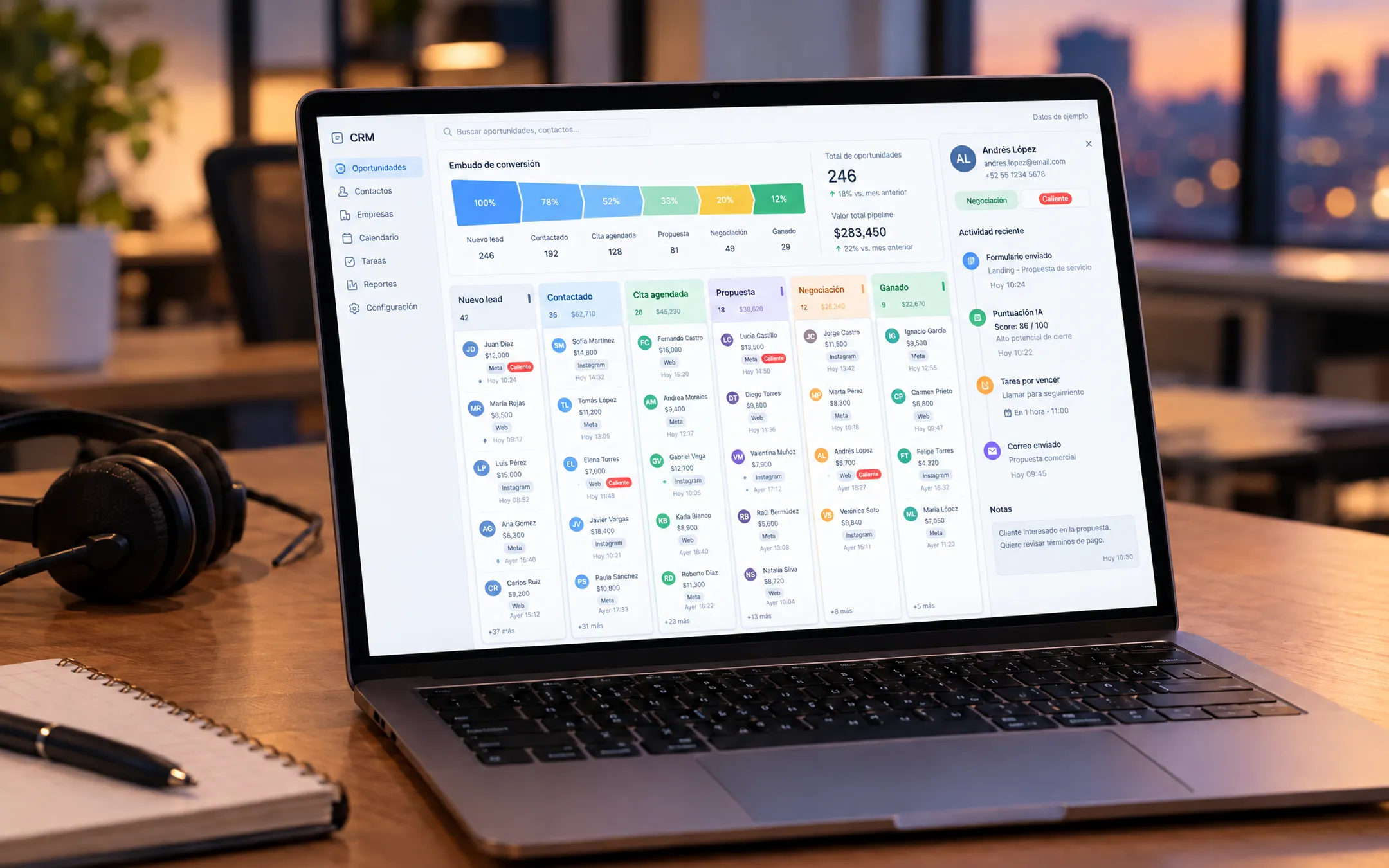 Artificial intelligence · 6 min readHow do I start automating my business with artificial intelligence?Start with one repetitive process that already costs hours or money, such as replying to leads, following up with customers or capturing data, and connect AI to the tools you already use (CRM, WhatsApp, forms). Measure the result in weeks, then automate the next process. AI performs when it works with your real data and clear rules for when to hand off to a person.Read the answer →
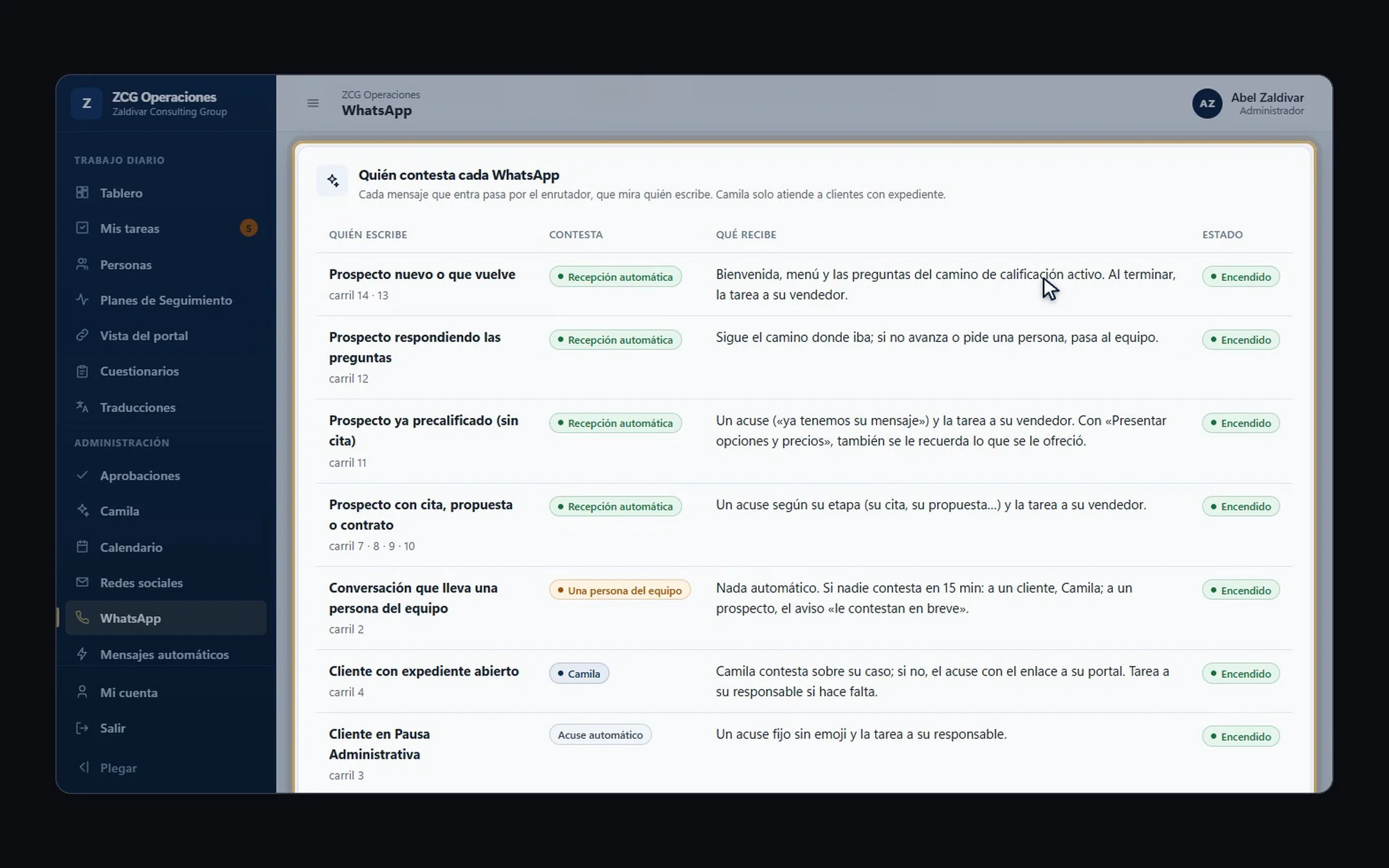 Artificial intelligence · 5 min readCan an AI assistant handle my customers on WhatsApp?Yes. An AI assistant can answer on WhatsApp around the clock with your company's real information: order or case status, hours, prices, missing documents. The key is connecting it to your systems, limiting what it can say and handing the conversation to a person when the case needs it.Read the answer →
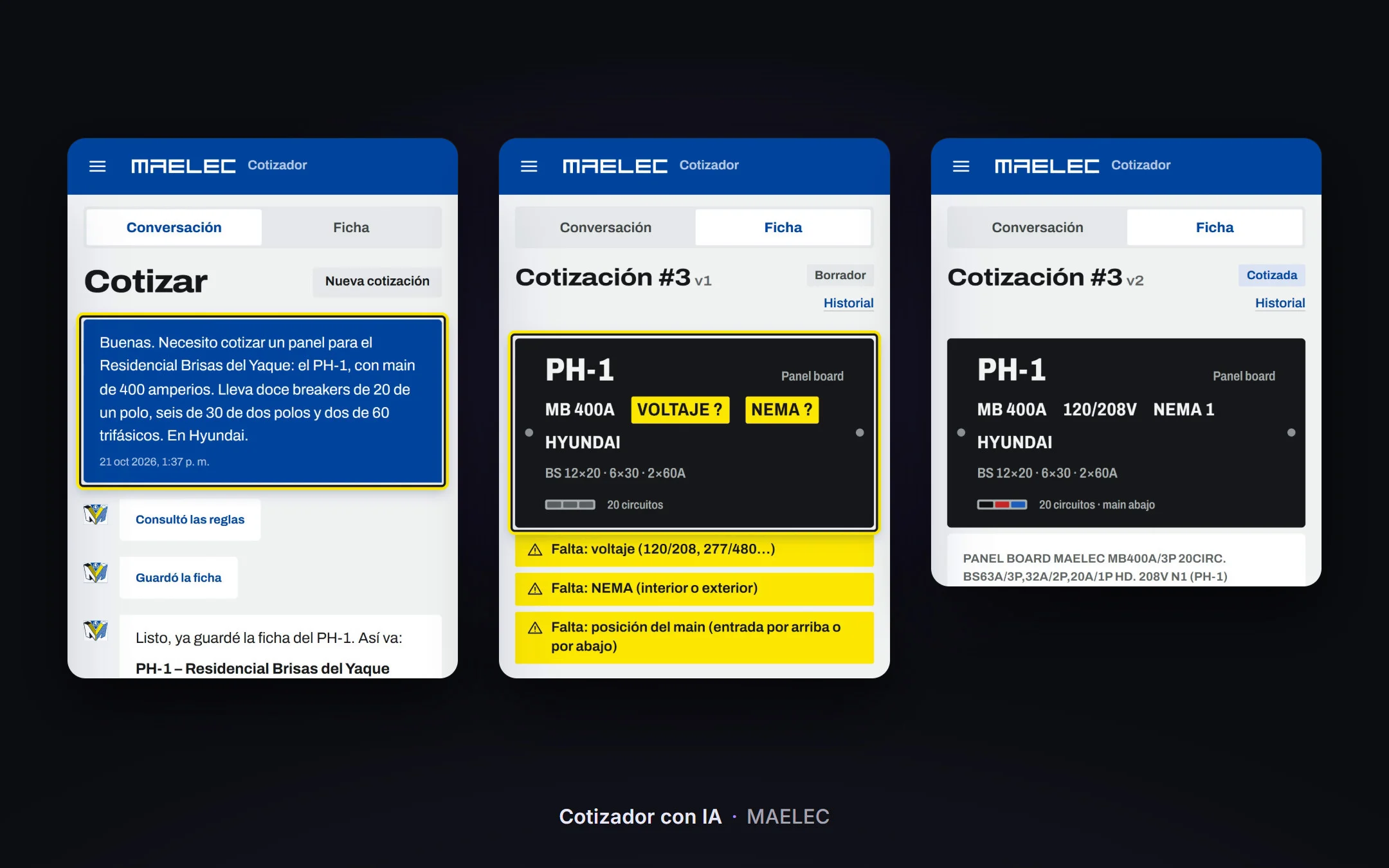 Artificial intelligence · 5 min readHow do you build an automatic AI quoting tool for a technical equipment distributor?An automatic AI quoting tool for a distributor takes the order typed the way you would tell a colleague, builds the spec sheet for each piece of equipment, asks only for what is missing and quotes with the prices in your ERP. A spreadsheet with formulas is enough when your products have few combinations; a custom quoting tool makes sense when every quote means checking sizes, brands and price lists by hand and each salesperson does it their own way.Read the answer →