 DARK MATTER
Apps · 6 min read · Updated
Should I use Shopify or a custom online store?
Short answer
Shopify fits if you sell a standard catalog with common shipping and payments and want to launch quickly. A custom online store fits when your selling has its own rules, such as delivery times per product, home delivery by zone, made-to-order products or a direct link to your inventory and operation. The decision comes from your processes, not from a template.
Also asked as
- Shopify or a custom-built online store?
- When should I leave Shopify and build my own store?
- Advantages of custom ecommerce over a platform.
What Shopify solves and where it stops
Shopify is a ready-to-sell platform: catalog, cart, payments and shipping with templates. It is a good option to validate a store or for businesses with a standard sales process.
It falls short when the store has to follow rules the platform does not cover, or when the monthly fee and the cost of add-on apps start to outweigh building your own.
Signs you need a custom store
- Each product has its own delivery time, reference or purchase conditions.
- Home delivery only in certain zones or with rules of your own.
- You sell made-to-order products, and the store must hand the order to production.
- You want the store to share data with your inventory, point of sale or internal system.
- You need direct WhatsApp contact tied to the order.
- You want to own the code and your customers' data.
What an online store that really sells needs
- Category catalog with search, filters and deals.
- Product pages with price, reference and delivery time.
- Cart, favorites and customer account.
- Order status tracking.
- A design built for shopping on a phone.
- Store locator and WhatsApp contact if you also sell in person.
What drives the cost
It depends on how many products and categories there are, the delivery and payment rules, the languages, integrations with inventory, invoicing or logistics, and the panel used to manage the catalog and orders. The way to control the investment is to launch the catalog and checkout first and add features from real sales. You get a written proposal after a free assessment.
A low-risk path: start on a platform and migrate
If you do not sell online today, you can start on a platform and migrate once volume and rules justify it. What matters is to export your products, customers and orders from the start, so a later switch does not leave you without history.
What we check first in an assessment
We follow one order from start to finish: how the customer finds the product, what information they need to decide, how the delivery time is confirmed and what happens with inventory, payment and delivery. From that we decide whether a platform is enough or the process needs something of its own.
How we solved it
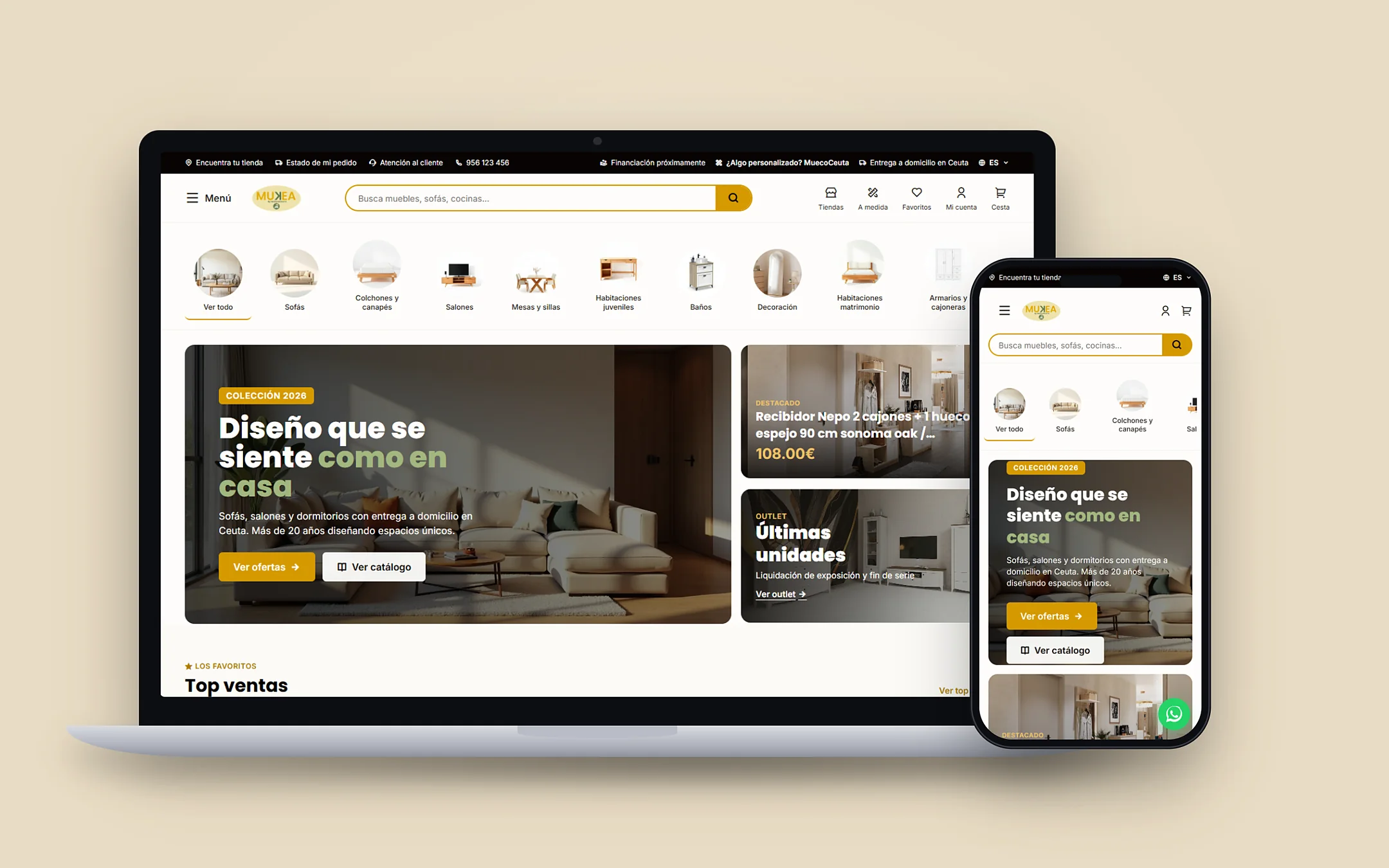 eCommerceMukeaMukea is the online store of a furniture retailer with over 20 years in Ceuta, Spain, which previously sold only in-store and by phone. We built the category catalog with search, favorites, deals and outlet, product pages with reference, price and delivery time, cart, customer account, order tracking, store locator, WhatsApp and home delivery, designed for shopping on a phone.See the project →
Related questions
Can I start on Shopify and move to a custom store later?
Yes, it is a common path. Export your products, customers and orders from the start so you can migrate them without losing history when the store calls for it.
Does a custom store look good on a phone?
It should. Most purchases begin on a phone, so the design, cart and checkout are built for small screens first.
Can the store connect to my physical business?
Yes. The store can show your locations, answer through WhatsApp and share data with your inventory or point of sale.
Does your business have this question?
Walk us through your operation in a free assessment and get a written proposal with scope, phases, timeline and investment.
Keep reading
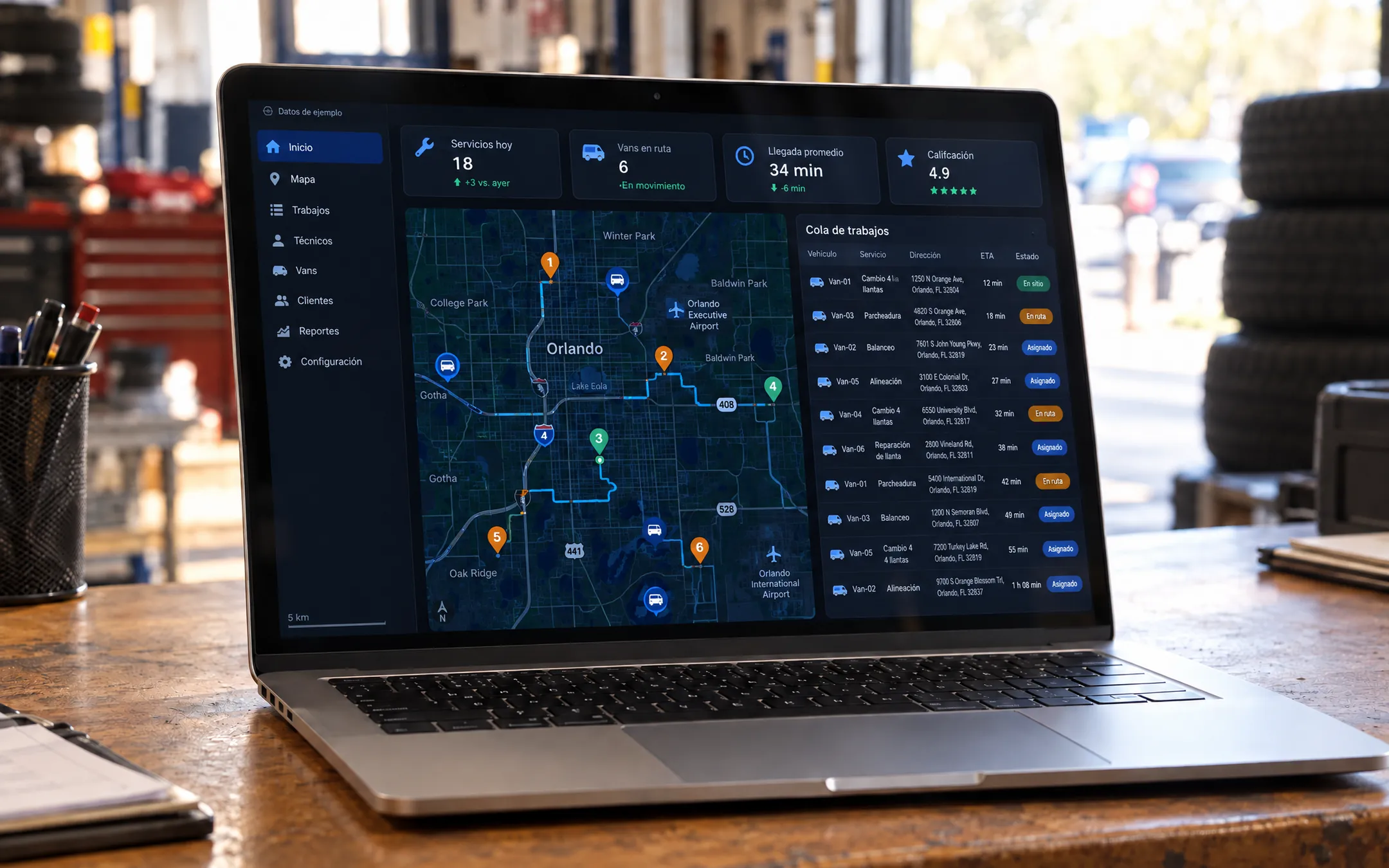 Apps · 6 min readIs a mobile app worth it for my business?It is worth it when the app solves something your customers or team do often on their phones: booking, ordering, paying, dispatching technicians, logging jobs or checking status. If it would only repeat your website, skip it. A cross-platform app for Android and iOS costs less than two native apps.Read the answer →
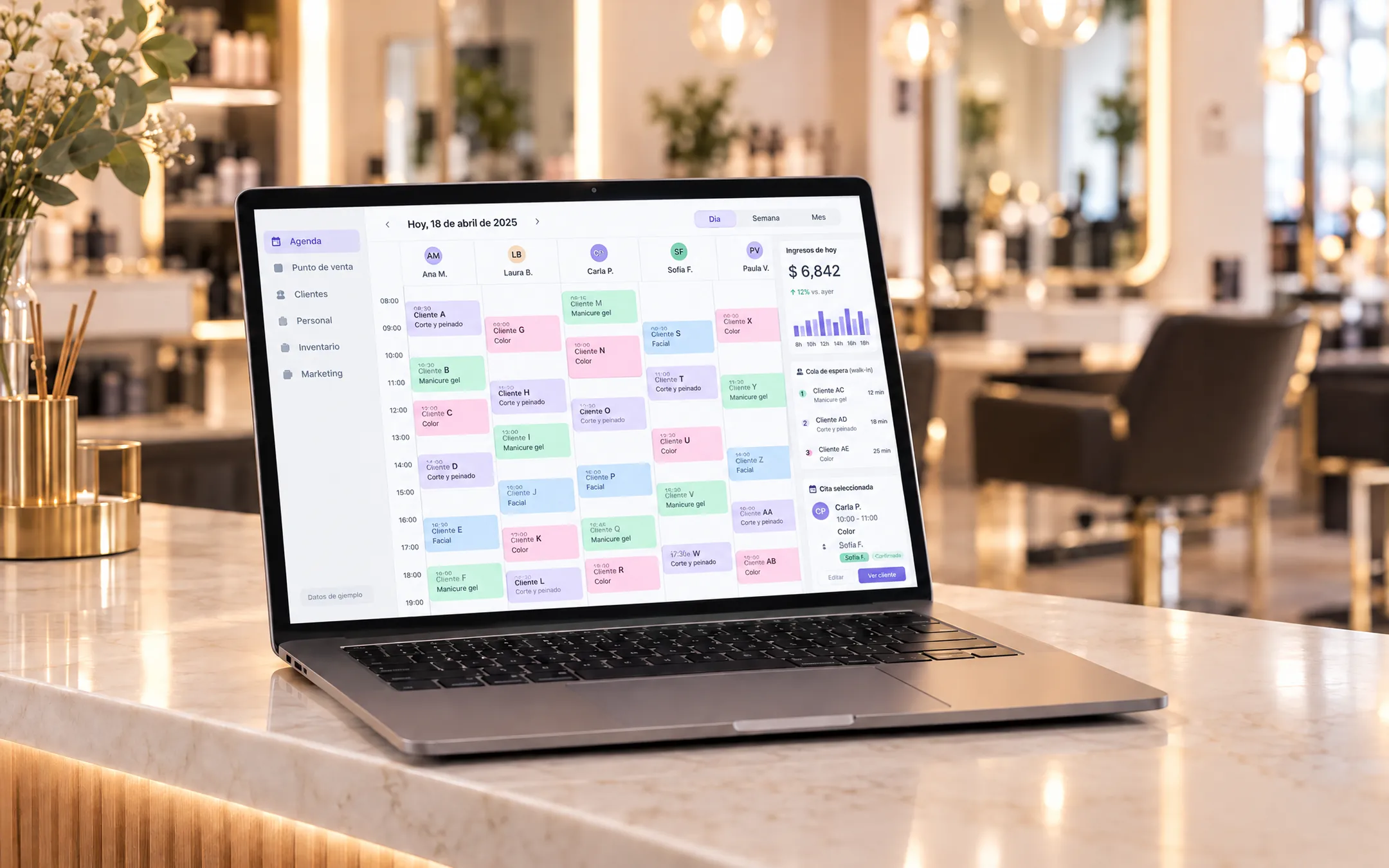 Apps · 5 min readShould I build my app with no-code or hire professional development?No-code platforms are good for validating an idea or a simple internal process. Professional development pays off when the app handles payments, sensitive data, many users, several locations or its own rules, or when the platform's per-user monthly cost starts to exceed what owning a system would cost.Read the answer →
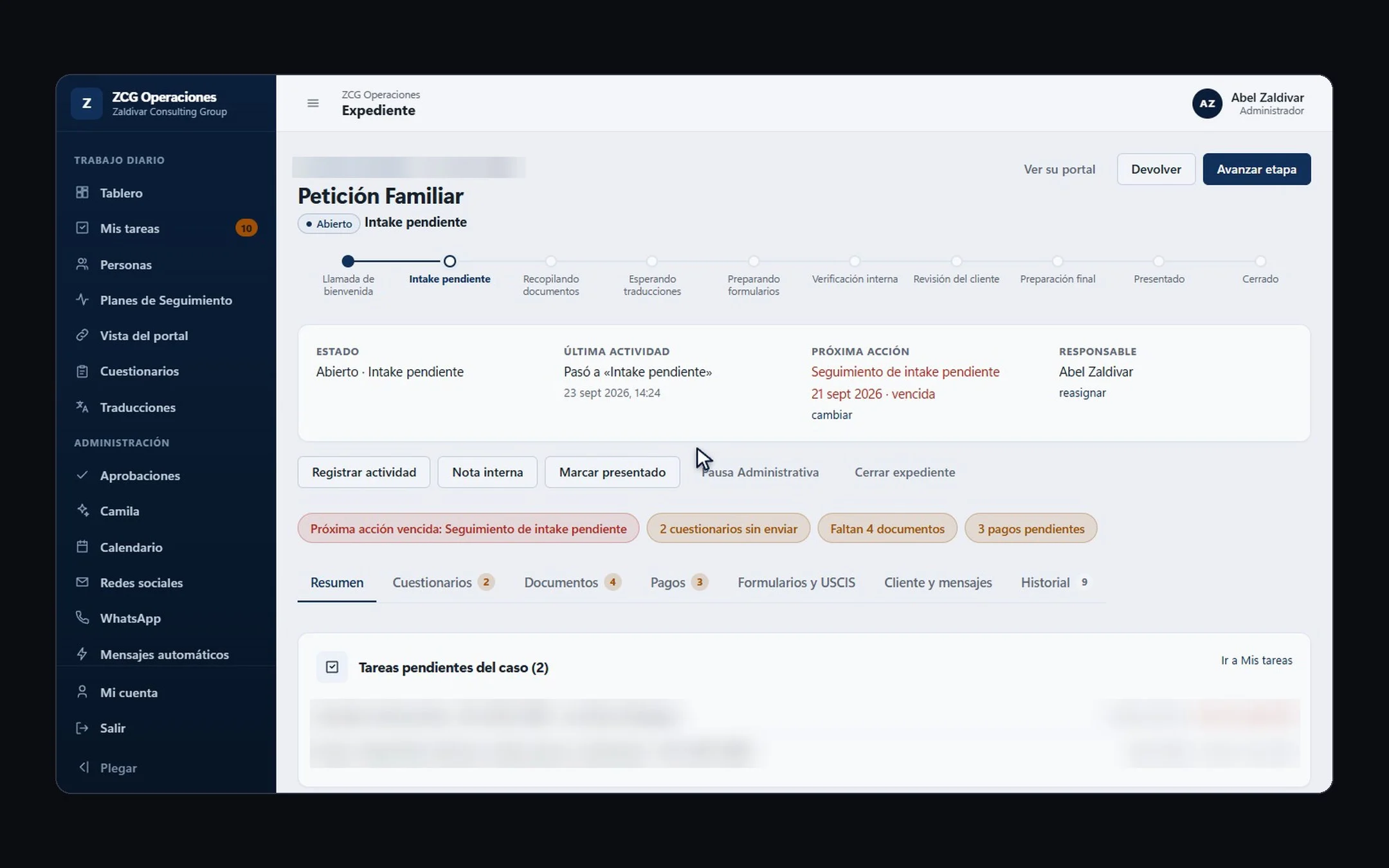 Hiring a developer · 6 min readHow do you choose a custom software development company in the US?Pick a company with real projects similar to yours, that understands your operation before talking technology, and that puts scope, phases, timeline and investment in writing. Before signing, confirm who owns the code, what support looks like after launch, and that they can work in your team's language.Read the answer →