 DARK MATTER
Location doesn't matter
Your team and ours work on the same online system, with progress you can test at every phase.
We build systems for Chicago companies that distribute, transport, manufacture and serve customers: inventory, ERP, fleet tracking, point of sale and AI automation. We work online and in the same time zone.
 Real projectNexus OBD →
Our model does not require in-person meetings: discovery, design, phased deliveries, training and support happen over video calls, WhatsApp and email, in English or Spanish. That is how we work today with companies across the United States, the Dominican Republic, Spain and Argentina. If your project needs an in-person meeting, we coordinate it.
Your team and ours work on the same online system, with progress you can test at every phase.
Video calls on your schedule and, if the project calls for it, a visit planned ahead of time.
Scope, phases, timeline and investment in a clear proposal before we start.
Chicago is in our time zone (Central), so the full workday overlaps.
A call to understand your operation and the process that costs you the most today.
Scope, phases, timeline and investment before a single line of code.
Every phase ends with something your team can already use and test.
We train your team and stay with you after launch.
Chicago is a Midwest transportation and distribution hub, with manufacturing, food, restaurants, professional services and a very large Mexican and Hispanic business community. These companies have warehouses, delivery routes and teams that need to know in real time what is in stock, what shipped and what is left to collect.
Inventory per warehouse, orders, delivery routes and invoicing, all connected.
Vehicle GPS tracking, dispatch, proof of delivery and reports.
Production orders, batches, supplies and quality control in a custom ERP.
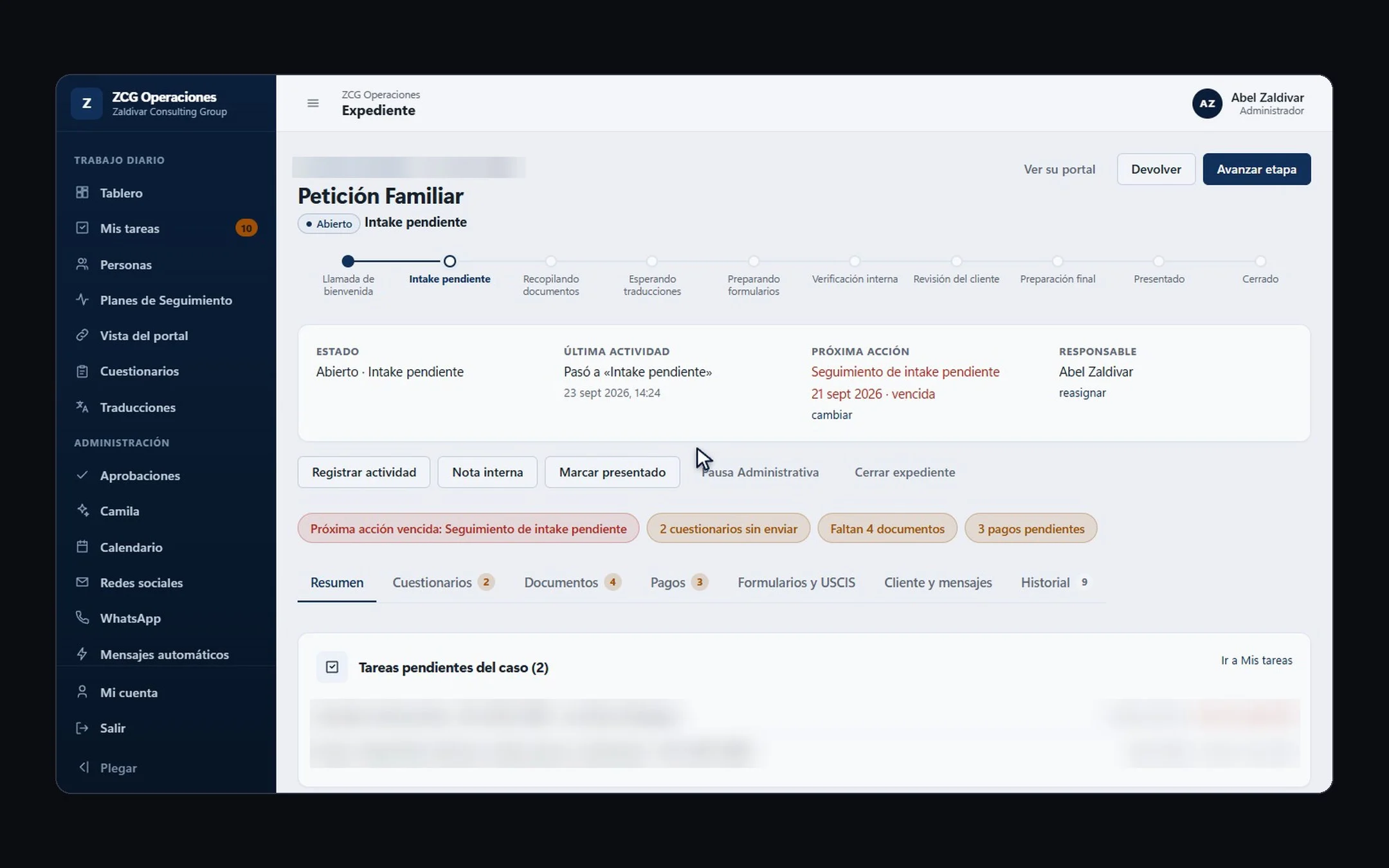
Client portals, secure documents and case tracking.
Inventory per warehouse, wholesale orders, delivery routes, credit accounts and invoicing connected to QuickBooks.
Live location for every vehicle, alerts, engine fault codes and reports per driver and per route.
Sales, inventory, margins, collections and fleet performance on one live dashboard fed by your systems, instead of a weekly Excel report.
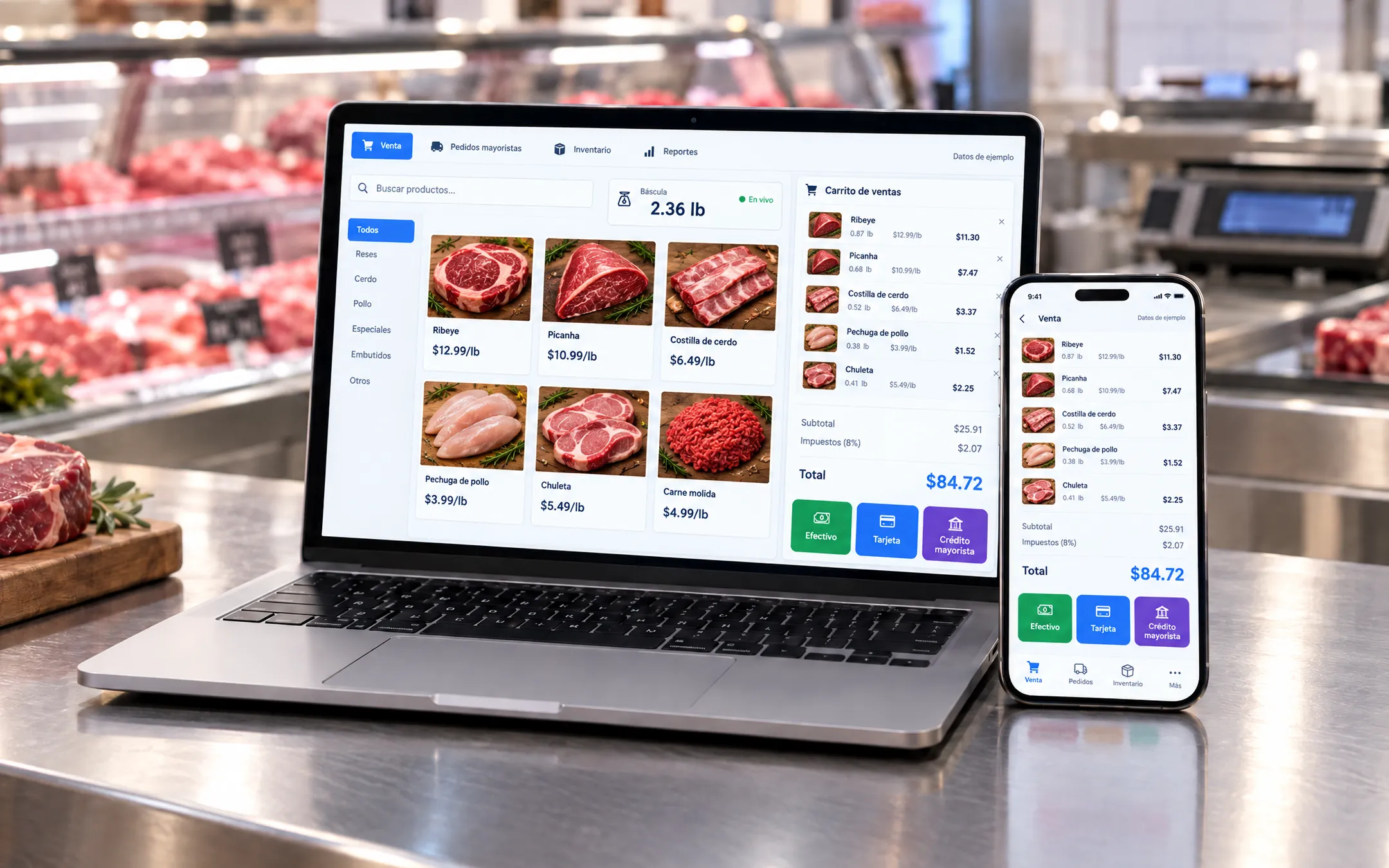
Sales by weight, unit or case, multiple locations, register closing and per-location reports.
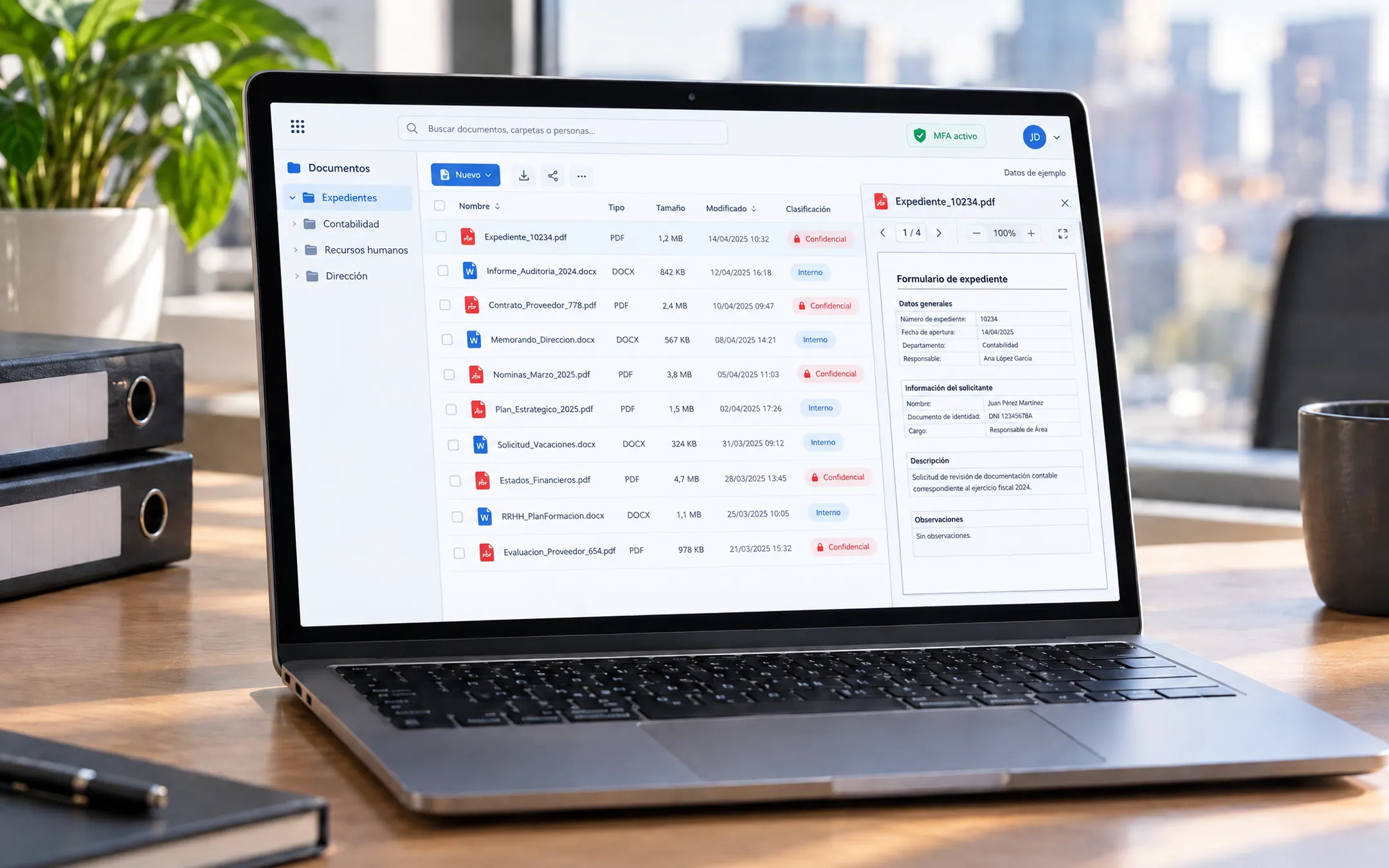
Secure portals for professional firms: documents with role-based permissions, MFA, backups and case tracking.
WhatsApp answers with your company's data, and leads that land in the CRM on their own, prioritized and followed up.
Industries
Services
LiveSample image · real one is confidentialMulti-tenant SaaS for live fleet GPS tracking and OBD-II diagnostics from Teltonika trackers.
 LiveSample image · real one is confidential
Bilingual local-SEO website plus a wholesale/retail POS for a Latin butcher shop in Manhattan.
 LiveSample image · real one is confidential
Secure serverless cloud for a consulting firm: MFA, role-based storage, backups and a Windows drive.
Other cities we serve online
 Hiring a developer · 6 min readHow do you choose a custom software development company in the US?Pick a company with real projects similar to yours, that understands your operation before talking technology, and that puts scope, phases, timeline and investment in writing. Before signing, confirm who owns the code, what support looks like after launch, and that they can work in your team's language.Read the answer →
 Hiring a developer · 8 min readWhat are the best custom software and AI automation options for Hispanic small businesses in the US in 2026?For most Hispanic small businesses in the US, a bilingual software studio that understands the operation, builds in phases and leaves the code in the client's name is the best fit. A freelancer works for something small and one-off; a no-code tool for a simple process; an offshore agency if you have someone to manage it in English; and a big consultancy if you are a large company. Below are the criteria to compare anyone, including us.Read the answer →Hiring a developer · 5 min readWhat is the process for hiring custom software development?There are six steps: a discovery of your operation, a written proposal with scope, phases, timeline and investment, the contract, screen designs you approve before building, development in phases with deliveries you test, and launch with training and support. Each phase is paid and delivered separately.Read the answer →
No. We work online from Texas with companies in Chicago and worldwide. If your project needs an in-person meeting, we coordinate it.
Yes. We build custom management systems: inventory, purchasing, sales, routes and invoicing on one platform, in phases.
Yes. Chicago and our team are both on Central time.
Yes. Each warehouse has its own inventory, with transfers between them, and you see stock for all of them on one dashboard.
Yes. We can send invoices, payments and customers to QuickBooks so your accountant keeps working there, with no double entry.
Yes. The system builds the day's routes from the orders, and drivers see their deliveries and confirm each one from their phone.
It depends on how many processes it covers, how many user roles it has and which integrations it needs. That is why we start with a free assessment and then give you a written proposal with scope, phases, timeline and investment.
Yes. We connect your systems, QuickBooks or spreadsheets and build live dashboards with the KPIs you actually use: sales, inventory, margins, collections or fleet performance.
We work in phases: the first one is usually in use within weeks, not months, and the rest is added in stages based on what matters most.